

Table of Contents
- Why Vintage British Animation Memorabilia Is Booming in 2026
- Key Eras and Types of Vintage British Animation Memorabilia
- Identifying Authentic Animation Cels
- How to Preserve Animation Collectables for Long Term Value
- Best Display Cases for Animation Art
- Where to Buy and Sell Vintage British Animation Memorabilia
- Is Vintage British Animation Memorabilia a Good Investment?
- Conclusion
- Frequently Asked Questions
Last Updated: September 20, 2026
Why Vintage British Animation Memorabilia Is Booming in 2026
Nostalgia has become one of the strongest forces in the collectables market, and animation art sits right at its centre, which is why a collecting vintage british animation memorabilia guide is so timely. A generation that grew up on teatime television now has the disposable income to buy back its childhood, which explains why a collecting vintage british animation memorabilia guide is more useful today than it has ever been. This guide from Roobarb and Custard walks through the eras, the formats, the authentication checks and the storage decisions that separate a genuine collection from a pile of hopeful purchases.
The appeal is not simply sentimental. Animation art sits at the intersection of television history and original artwork, which gives it two separate audiences: people who remember the programmes and people who collect mid-century illustration. That overlap is what makes certain pieces hold their value while ordinary merchandise fades.
Below, we break down the eras worth knowing, how to spot a genuine production cel, and how to store and display what you buy.
Key Eras and Types of Vintage British Animation Memorabilia
Animation memorabilia covers four broad categories: production cels, character design and style sheets, promotional posters, and merchandise such as toys, books and ceramics. Each behaves differently as a collectable, and the era a piece comes from shapes both its scarcity and its condition.
The 1950s-1960s: Early Television and Cinema Shorts
Pieces from this period are the hardest to find and the easiest to misjudge. Animation for early television was produced on tight budgets, and much of the artwork was discarded once a film had been shot. What survives tends to be promotional material, publicity stills and the occasional cel that a studio employee kept.
Condition matters more here than anywhere else. Paint that has flaked, cels that have stuck together, and paper that has foxed with age are all common, and restoration is rarely worthwhile on low-value pieces. Buy the best example you can afford rather than several poor ones.
The 1970s-1980s: The Golden Age of Wobbly Animation
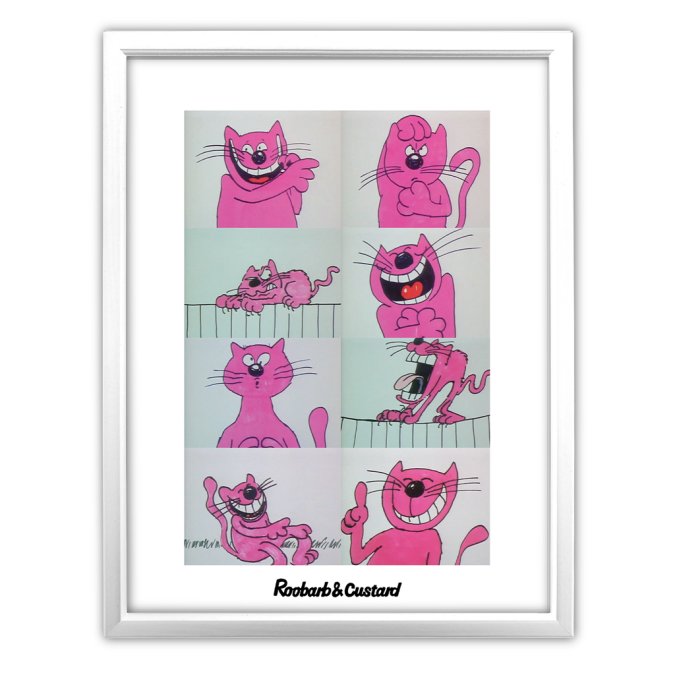
The 1970s and 1980s produced the style most collectors picture first: loose marker linework, deliberately uneven outlines and bold flat colour. Bob Godfrey's work on Roobarb and Custard is the defining example, and the show's hand-drawn character sheets remain among the most sought-after pieces of the era.
This is also the period with the deepest supply of merchandise. Ceramics, clothing, books and prints were produced in volume, and much of it survived in lofts and cupboards. That availability keeps entry prices reasonable while the rarer production artwork climbs.
Identifying Authentic Animation Cels
Identifying authentic animation cels means checking four things: the physical materials, the peg holes, the registration marks, and the provenance paperwork. A genuine production cel is a sheet of clear acetate painted by hand and photographed frame by frame, which leaves physical traces a reproduction cannot easily fake.
Start with the acetate itself. Vintage cels have a slight thickness and a faint smell that modern reproductions lack, and the paint sits on the reverse. Hold the sheet up to a light: hand-painted areas show brush texture and small uneven edges rather than the flat uniformity of a digital print.
Then check the peg holes. Production cels were punched to fit a specific animation stand, so the holes should be consistent in size and spacing and should show wear from repeated use. A cel with no peg holes at all is almost certainly a display reproduction.
Finally, provenance. Original studio paperwork, a certificate from the production company, or a documented auction history all strengthen a claim. Where none exists, treat the piece as decorative rather than investment grade and price it accordingly.
How to Preserve Animation Collectables for Long Term Value
Preservation comes down to three enemies: light, heat and moisture. Animation art is pigment on paper or acetate, and all three degrade it steadily. Getting the storage environment right is the single highest-return action a collector can take.
Keep pieces out of direct sunlight and away from radiators, and aim for a stable room rather than a fluctuating one. Ultraviolet light fades pigment faster than anything else, so even a bright north-facing wall can cause damage over years. If a piece is on display, rotate it periodically and keep the room's light levels low.
Roobarb 'Colour Pop' Limited Edition →
Store flat rather than rolled. Rolling stresses the acetate and encourages paint to crack along the curve. Interleave sheets with acid-free tissue, use archival boxes, and handle everything with clean cotton gloves to avoid transferring oils from your skin.
For paper items such as posters and style sheets, acid-free mounts and backing boards are essential. Ordinary cardboard is acidic and will yellow paper from the inside out.
- Store flat in an acid-free box, never rolled
- Interleave with acid-free tissue between sheets
- Keep away from windows, radiators and damp walls
- Handle with cotton gloves only
- Check stored pieces twice a year for flaking or foxing
Best Display Cases for Animation Art
The best display cases for animation art block ultraviolet light, seal against dust and humidity, and hold the piece away from the glazing. Those three requirements rule out most cheap poster frames.
Look for UV-filtering glass or acrylic as a minimum. Standard glass offers no meaningful protection, and a south-facing wall behind ordinary glass will fade a print within a few years. Museum-grade glazing costs more but is the difference between a piece that holds value and one that does not.
Spacing matters as much as glazing.
Where to Buy and Sell Vintage British Animation Memorabilia
Specialist dealers and dedicated fan shops are the safest route, followed by established auction houses with documented provenance. General marketplaces can produce bargains, but they are also where most reproduction pieces circulate.
Is Vintage British Animation Memorabilia a Good Investment?
For genuinely rare production artwork, yes, provided you buy quality and hold. For mass-produced merchandise, treat it as a purchase you enjoy rather than an asset.
| Approach | Typical Outcome | Best For |
|---|---|---|
| Production artwork, documented | Strongest long-term hold | Serious collectors |
| Limited edition prints | Steady, modest appreciation | Display-led buyers |
| Mass-produced merchandise | Sentimental value only | Gifting and nostalgia |
| Undocumented cels | Decorative value | Entry-level buyers |
Conclusion
The hardest part of collecting animation memorabilia is not finding pieces, it is judging them: telling a genuine cel from a reproduction, and a well-stored print from one that has spent a decade against a window. Get that right and the rest follows.
Frequently Asked Questions
What are the most valuable types of vintage British animation memorabilia?
Original production cels, especially those featuring main characters from 1970s series, tend to hold the highest value. Limited edition prints, such as the Roobarb 'Colour Pop' print (only 100 made, £75), also appreciate because of their scarcity. Early merchandise like toys and posters from the 1960s and 1970s can be valuable if in good condition. Condition, rarity, and provenance are the biggest drivers of price.
How do I verify the authenticity of original animation cels?
Look for production markings like sequence numbers, studio stamps, and peg holes that align with animation camera setups. Authentic cels often have hand-painted areas and may include a certificate of authenticity from a reputable dealer. Check for signs of ageing like paint cracking, which is normal. Cross-reference with known studio practices and, if possible, consult collector forums or experts before buying.
What is the best way to store and display animation art to prevent fading?
Store animation art in acid-free sleeves or boxes, away from direct sunlight and heat. For display, use UV-filtering glass or acrylic frames and rotate pieces periodically to limit light exposure. Keep humidity stable, around 40-50%, to prevent warping. The best display cases for animation art often include UV protection and a sealed environment to keep out dust and pests.
Where can I find reputable auctions for British animation collectables?
Specialist auction houses and online platforms can be good sources, but always check seller ratings and return policies. For higher-end pieces, reputable auction houses occasionally hold entertainment memorabilia sales. Joining collector groups on social media can also alert you to reputable sales. Always ask for provenance and detailed photos before bidding.
How does the condition of an animation cel affect its market value?
Condition is critical: cels with vibrant paint, no scratches, and minimal fading command higher prices. Even small flaws like paint loss or creases can reduce value significantly. For example, a cel in mint condition might sell for hundreds of pounds, while one with damage could fetch a fraction. Proper preservation, such as using acid-free materials, helps maintain both condition and value over time.
Are there any UK regulations I should know about when buying or selling vintage animation memorabilia?
When buying or selling, you should comply with UK consumer protection laws, which require accurate descriptions. If you're selling as a business, you must follow distance selling regulations, including providing clear return policies. For high-value items, ensure you have proper documentation to avoid disputes. Always keep receipts and certificates of authenticity for insurance and resale purposes.