

Table of Contents
- What You Actually Get: A Quick Verdict on Retro Cartoon Merchandise
- How to Identify Authentic Retro Merchandise Before You Pay
- Original Vintage or Modern Licensed Reproduction?
- What You Pay: Prices, Postage and Real Value
- Best Retro Cartoon Brands to Collect (and What Makes Them Last)
- Maintaining the Condition of Vintage Collectables and Everyday Wear
- The Verdict: When Retro Cartoon Merchandise Is Worth Your Money
- Frequently Asked Questions
Last Updated: September 23, 2026
What You Actually Get: A Quick Verdict on Retro Cartoon Merchandise
Short answer: yes, if you buy official. Retro cartoon merchandise is clothing, homeware and collectables featuring characters from classic animation, and its value depends almost entirely on whether the item is officially licensed. This guide from Roobarb and Custard walks through authenticity checks, the vintage-versus-reproduction question, real prices and long-term care.
Here is the honest verdict up front. A licensed t-shirt at £19.99 that survives years of washing is better value than a £7 knock-off that fades by autumn. Most disappointed buyers did not overpay. They bought unofficial stock and got exactly what they paid for.
Below, we break down what to check before you spend, what a fair price looks like, and which pieces hold their condition best.
How to Identify Authentic Retro Merchandise Before You Pay
Authentic retro merchandise carries a named licence holder, consistent artwork and clear care information. Fakes usually fail on at least one of those three.
Start with the artwork itself. Official designs are drawn from original animation assets, so character proportions, line weight and colour match the broadcast material. Bootleg prints often redraw characters by hand, and the differences show in the eyes and the outlines.
Then check the listing for specifics:
- A stated licence or "official merchandise" claim tied to a named rights holder
- Material details, such as 100% organic cotton or a named coating like Duraglaze
- A tested durability claim, for example a mug rated to BS EN 12875-4 standards
- Care instructions that match the material
- A returns policy with a real postal address
What most guides miss is that price consistency is a signal too. Official ranges price similar items similarly across the whole catalogue. If one seller lists the same design at a third of everyone else's price, that gap is the tell.

Original Vintage or Modern Licensed Reproduction?
Original vintage pieces and modern licensed reproductions serve different buyers, and neither is automatically better. Vintage means an item produced close to the original broadcast era. Reproduction means a newly made item produced under licence today.
Vintage appeals to collectors who want the object itself. The trade-offs are real: limited stock, condition risk, sizing that no longer matches modern charts, and no manufacturer support if something fails.
Reproduction appeals to people who want to wear and use the item. Modern licensed apparel is cut to current sizes, printed with methods that resist cracking, and backed by a returns process. For everyday wear, this is the sensible route.
A useful rule: buy vintage to display, buy licensed reproduction to use. Mixing those two goals is where most regret comes from.
What You Pay: Prices, Postage and Real Value
Prices across an official retro range cluster into three bands, and each band buys something different. Here is how the categories compare.
| Category | Typical Price | What You Are Paying For | Best For |
|---|---|---|---|
| Small homeware | £4.99 to £14.99 | Everyday use, tested durability | Gifts, desk and kitchen |
| Apparel | £17.99 to £29.99 | Organic cotton, UK printing | Regular wear |
| Premium apparel | £49.99 | Heavyweight fabric, detailed construction | Cold-weather wear |
| Limited art prints | £75.00 | Rarity, mounting, archival paper | Collectors and display |
Postage is the hidden cost that catches people out. A single low-value item can see postage eat a large share of the total, so bundling a mug, a coaster and a tote into one order usually works out better than three separate purchases.

Value, in practice, comes down to cost per wear or cost per use. A £14.99 mug used daily for two years costs pennies a day. A £75 print that hangs on a wall for a decade costs even less. The number that matters is not the sticker price. It is how long the item keeps looking good.
Best Retro Cartoon Brands to Collect (and What Makes Them Last)
The brands worth collecting are the ones that control their own production and publish their specifications. That combination is what separates a collectable from a novelty.
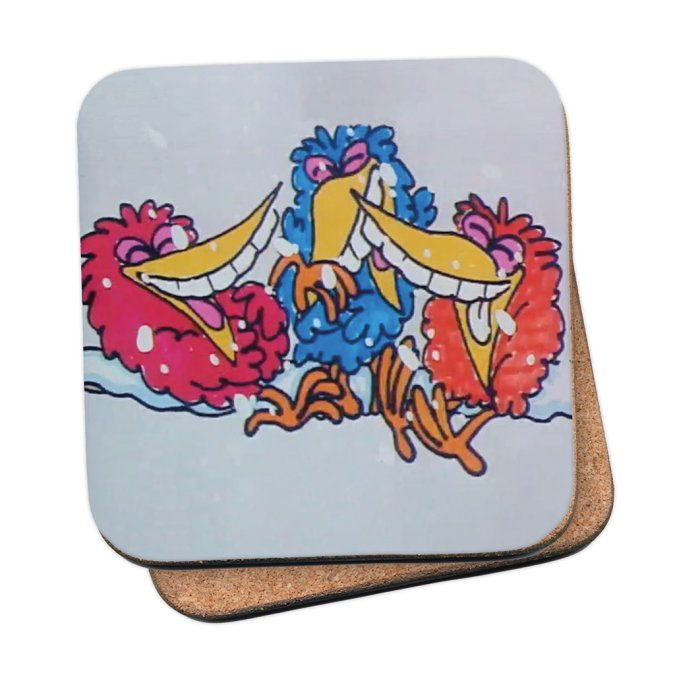
Roobarb and Custard is a strong example of the licensed approach done properly. The range covers apparel, homeware and kitchenware, all produced under official licence and printed in the UK. Two details stand out for collectors. The mug is coated with Duraglaze and independently tested to BS EN 12875-4 standards, rated for over 2,000 washes. The 'Colour Pop' mounted prints are limited to 100 of each design worldwide, which gives them a defined ceiling on supply.
Roobarb & Custard 'The Birds' Ceramic →
What makes items last comes down to three things:
- Print method. Coatings and quality inks resist fading; cheap transfers crack.
- Base material. Organic cotton holds shape better than thin blended fabric.
- Construction details. Metal eyelets, lined hoods and reinforced straps outlast glued or stitched shortcuts.
Where a range falls short is usually variety rather than quality. If you want a specific character on a specific garment, the official catalogue may not cover every combination. That is the trade-off for buying licensed rather than generic.
Maintaining the Condition of Vintage Collectables and Everyday Wear
Condition is where value is won or lost, and the rules differ between display pieces and things you actually wear. A vintage print kept out of direct sunlight holds its colour for decades. The same print on a sunny wall fades within a few years.
For everyday wear, follow the label rather than instinct:
- Wash inside-out at a low temperature to protect the print surface
- Iron on the reverse, never directly over the design
- Skip the tumble dryer on heavyweight cotton, as heat distorts the shape
- Sponge clean caps rather than machine washing them
For collectables, the priorities shift. Keep prints framed behind glass and away from radiators. Store textiles flat and folded rather than on hangers, which stretch shoulders over time. Keep original packaging if you have it, since complete items hold more interest for collectors.
A common mistake is over-cleaning. Every wash cycle wears a print slightly, so treat cleaning as maintenance rather than routine.
The Verdict: When Retro Cartoon Merchandise Is Worth Your Money
Retro cartoon merchandise is worth buying when three conditions line up: the item is officially licensed, it will be used or displayed regularly, and the price sits within the normal band for its category.
It is not worth buying when you are chasing a bargain from an unnamed seller, when the item is a duplicate of something you already own, or when the design is a redrawn imitation. Those purchases rarely satisfy, and they undermine the market for the licensed makers who actually support the artists.
For most buyers, the sensible entry point is a mug or a t-shirt. Both get daily use, both are priced low enough to test the water, and both tell you quickly whether the quality matches the nostalgia. Collectors can then move up to limited prints, where the capped production run does the value work.
The wider point is that nostalgia is not the product. Quality is. A well-made item earns its place in your kitchen or wardrobe for years, and that is what makes the purchase worthwhile.
Nostalgia is easy to sell and hard to do well, and the difference shows up in the wash.
Frequently Asked Questions
How do I spot fake or unofficial retro cartoon merchandise?
Check for an official licensing line or brand mark on the label, swing tag or packaging, and look for the copyright symbol with the rights holder's name. Unofficial items often use slightly altered character art, blurry print edges or generic packaging with no brand details. On clothing, feel the print: official transfers sit flat and survive washing, while cheap ones crack within a few washes. If the price is far below everything else you have seen, treat that as a warning rather than a bargain.
Is retro cartoon merchandise a good financial investment?
Treat it as enjoyment first, investment second. Limited runs do hold and sometimes gain value, especially numbered pieces such as a print capped at 100 worldwide, but most mass-produced apparel and homeware will not fund your retirement. The items that appreciate tend to be scarce, well documented and kept in original condition. Buy what you genuinely want to own and use, and you will never be disappointed by the resale figure.
Is it better to buy original vintage items or modern licensed reproductions?
Originals carry history and scarcity, but they are often faded, fragile and hard to use day to day. Modern licensed reproductions are made to be used: a mug coated in the UK with Duraglaze and independently tested to BS EN 12875-4 can survive more than 2,000 washes, and organic cotton tees and hoodies are built for regular wear. For everyday enjoyment, buy modern; for display and collecting, chase the originals.
How can I keep my retro cartoon collectables in good condition?
Keep prints and paper items out of direct sunlight, which fades inks faster than anything else, and store them flat or framed with an acid-free mount. For apparel, wash inside-out at a low temperature, iron on the reverse and never tumble dry a printed hoodie. Sponge-clean caps rather than machine washing them. Coasters and mugs simply need a wipe or a dishwasher cycle, and keeping boxes and tags for limited editions protects their value.
Where is the best place to find authentic retro animation memorabilia?
Buy direct from the brand's own shop wherever possible, because that is the only route that guarantees officially licensed stock with a proper returns policy. Specialist retro retailers can be good for older pieces, but ask about provenance and returns before you pay. Auction sites carry genuine finds alongside a lot of fakes, so apply the same authenticity checks and always pay through a method that offers buyer protection.