

Table of Contents
- What Makes a Classic British Cartoon Collectible?
- 1. Roobarb and Custard (1974)
- 2. The Wombles (1973)
- 3. Bagpuss (1974)
- 4. Mr Benn (1971)
- 5. The Clangers (1969)
- 6. Ivor the Engine (1959)
- 7. Camberwick Green (1966)
- 8. Trumpton (1967)
- 9. Chigley (1969)
- 10. The Herbs (1968)
- How to Preserve Animation Collectibles for Long Term Value
- Where to Start Your Collection
- Frequently Asked Questions
Last Updated: 28 September 2026
What Makes a Classic British Cartoon Collectible?
Classic British cartoons are collectible when they combine three things: a distinctive hand-drawn style, a strong nostalgic pull for the generation that grew up watching them, and genuine scarcity of original merchandise. Animation cels, production art and officially licensed pieces from the 1960s and 1970s sit at the top of that list.
People don't collect these shows because a price guide told them to. They collect them because a wobbly green dog or a smug pink cat takes them straight back to teatime in 1974.
That emotional pull is exactly what drives long-term value, and it's why the ten shows below still command attention from serious collectors.
Arts Council England guidance on cultural heritage collecting
But before we get to the list, a word on what separates a genuine collectible from a car boot bargain. Animation cels are the hand-painted sheets used to create each frame of movement, and original production art includes the pencil sketches, style sheets and background paintings made before filming. Those are the pieces that hold value, because each one is a one-off from a specific studio and a specific moment in television history.
The shows below all share that heritage. Several were made by small studios with limited budgets, which means far less material survived than you'd expect. That scarcity is the whole game.
Here's how the ten break down at a glance, with what makes each one worth chasing.
| Cartoon | First Aired | Studio | Why Collectors Want It |
|---|---|---|---|
| Roobarb and Custard | 1974 | Bob Godfrey Films | Cult status, wobbly marker-pen style |
| The Wombles | 1973 | FilmFair | Environmental theme, huge merchandise range |
| Bagpuss | 1974 | Smallfilms | Beloved characters, gentle storytelling |
| Mr Benn | 1971 | Zephyr Films | Fancy dress concept, strong nostalgia |
| The Clangers | 1969 | Smallfilms | Distinctive knitted puppets |
| Ivor the Engine | 1959 | Smallfilms | Earliest of the Welsh classics |
| Camberwick Green | 1966 | Gordon Murray Puppets | First in the Trumptonshire trilogy |
| Trumpton | 1967 | Gordon Murray Puppets | Fire brigade, clock tower charm |
| Chigley | 1969 | Gordon Murray Puppets | Completes the trilogy |
| The Herbs | 1968 | FilmFair | Elegant illustration, short run |
1. Roobarb and Custard (1974)
Roobarb and Custard is the ultimate collector's cartoon, and it's our top pick for a reason. Bob Godfrey's hand-drawn marker-pen style gave the show a deliberately rough, wobbly look that no other series has matched since. Roobarb, the over-ambitious green dog, and Custard, the sarcastic pink cat next door, became cult figures almost overnight.
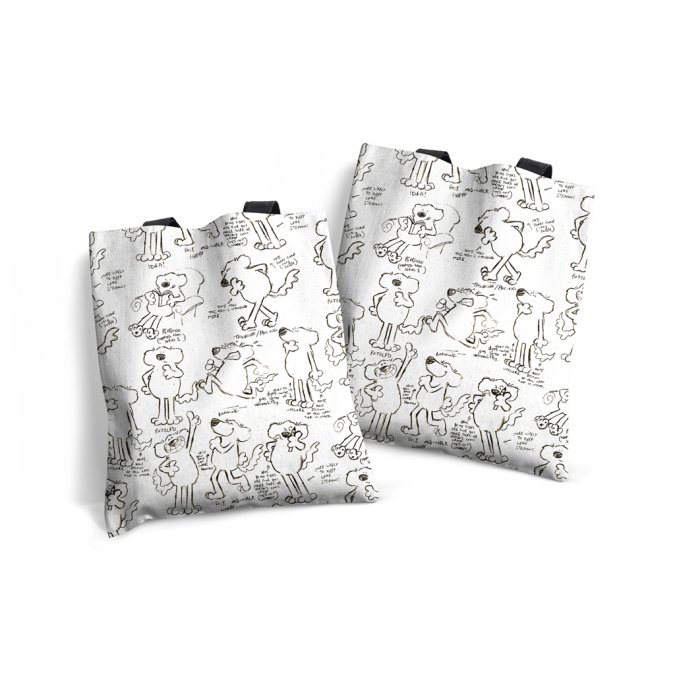
The show ran for just 30 episodes, which is precisely why original material is so hard to find. Fewer episodes meant fewer cels, fewer style sheets and fewer surviving production documents.
2. The Wombles (1973)
The Wombles turned litter-picking into a national obsession, and the merchandise followed. FilmFair's stop-motion series introduced Great Uncle Bulgaria, Orinoco, Tobermory and the rest of the Wimbledon Common crew, each with a distinct personality and a signature look.
3. Bagpuss (1974)
Bagpuss is the gentlest show on this list, and that's exactly why it endures. Smallfilms, the studio run by Oliver Postgate and Peter Firmin, created a saggy cloth cat who woke only when his owner Emily left the room. The mice on the mouse organ, Gabriel the toad and Professor Yaffle all became beloved figures.
4. Mr Benn (1971)
Mr Benn is the quiet genius of British animation. A bowler-hatted man visits a fancy dress shop, tries on a costume, and steps through a door into an adventure. That simple premise produced 14 episodes and a devoted following that has never faded.
5. The Clangers (1969)
The Clangers is the strangest and most charming entry on this list. Smallfilms created a family of pink, knitted mouse-like creatures living on a small planet, communicating in whistles. The Soup Dragon, the Iron Chicken and the Froglets filled out a genuinely odd little universe.
6. Ivor the Engine (1959)
Ivor the Engine is where Smallfilms began, and its age makes it the most historically significant cartoon on this list. The original series started as black-and-white shorts in 1959 before returning in colour in the 1970s. Ivor, a small green steam locomotive, worked the Merioneth and Llantisilly Rail Traction Company with his driver Jones the Steam.
Roobarb 'Colour Pop' Limited Edition →
British Film Institute archive on early British animation
7. Camberwick Green (1966)
Camberwick Green opened the Trumptonshire trilogy and set the template for everything that followed. Gordon Murray's puppets introduced Windy Miller, the baker, the farmer and a whole village of characters, each introduced by a rotating music box at the start of every episode.
8. Trumpton (1967)
Trumpton is the middle chapter of the trilogy and arguably the most fondly remembered. The fire brigade, led by Captain Flack, became the show's signature element, along with the town clock and the mayor. The fire station roll call is one of the most quoted sequences in British animation.
9. Chigley (1969)
Chigley completed the Trumptonshire trilogy and introduced a different setting: a large country estate with a biscuit factory and a railway. Lord Belborough, his butler Brackett and the workers at the factory gave the show its own identity while keeping the familiar stop-motion style.
10. The Herbs (1968)
The Herbs closes our list with a different visual approach entirely. FilmFair's series followed Parsley the Lion, Dill the Dog, Sage the Owl and a garden full of herb characters, all drawn in an elegant, illustrated style quite unlike the puppets elsewhere on this list.
How to Preserve Animation Collectibles for Long Term Value
- Keep paper items out of direct sunlight, including indirect bright light near windows
- Store flat in acid-free sleeves rather than folded or rolled
- Keep the room between roughly 40 and 60 percent relative humidity
- Handle prints and cels with clean cotton gloves, holding edges only
- Frame using acid-free mount board and UV-filtering glass
- Keep items away from radiators, kitchens and damp walls
- Photograph everything for insurance records before storing
- Check stored items twice a year for foxing, warping or pest damage
When it comes to collecting animation cels and production art, the same principles apply but with one addition: never tape or glue anything to the artwork itself. Original animation tape from the 1970s is often already failing, and adding new adhesive does more harm than leaving it alone.
Where to Start Your Collection
Start with the show that means the most to you, then look for officially licensed pieces rather than generic reproductions. That combination gives you something you'll actually enjoy owning and something that holds its value over time.
Frequently Asked Questions
What are the most valuable British cartoon collectibles?
The most valuable items are usually original production cels and drawings from shows like Roobarb and Custard, Bagpuss, and The Clangers. Limited edition prints, such as the Roobarb 'Colour Pop' print limited to 100 worldwide, also hold value because of their scarcity. Authentic merchandise from the 1970s in good condition, including mugs, T-shirts, and tote bags, is increasingly sought after by collectors who want to own a piece of animation history.
Where can I find authentic merchandise for classic British animation?
Authentic merchandise is best found directly from official brand shops, like the Roobarb and Custard online store. Buying from the official source guarantees you receive officially licensed products, such as the Roobarb & Custard Mug or the 'Custard Face Style Sheet' T-Shirt. These items are produced to high standards, often in the UK, and come with the assurance of quality and authenticity that third-party sellers may not provide.
How do I verify the authenticity of vintage animation cels?
Verifying a vintage animation cel involves checking for a certificate of authenticity from a reputable dealer or auction house. Look for production numbers, studio markings, and the characteristic 'wobbly' linework of the era. For Roobarb and Custard, original cels feature the distinctive marker-pen style of Bob Godfrey's studio. Also, examine the cel's paint condition and any accompanying documentation, as these details significantly affect both authenticity and value.
How should I store and display my animation collection to maintain value?
Store paper-based items like prints and cels in acid-free sleeves and keep them out of direct sunlight to prevent fading. For display, use UV-protective glass frames. Ceramic items like the Roobarb & Custard Mug should be hand-washed to preserve the Duraglaze finish, though it is dishwasher-proof. Textiles, including the organic cotton T-shirts and tote bag, should be washed cold and ironed inside-out to keep the prints crisp and the fabric in good condition.
Which classic British cartoons have the most sought-after merchandise?
Roobarb and Custard, Bagpuss, The Wombles, and Mr Benn consistently have high demand for their merchandise. Roobarb and Custard stands out because of its unique 'wobbly' animation style and the availability of official, limited edition items like the 'Colour Pop' prints and animator notes T-shirts. These pieces are particularly popular with collectors aged 40-60 who grew up watching the show and now want to own a tangible piece of that nostalgia.
Building a collection takes patience, and the hardest part is finding pieces that are genuinely official rather than cheap imitations. Roobarb and Custard exists to solve exactly that problem, with officially licensed merchandise printed and produced in the UK. Browse our limited edition Colour Pop prints, the Roobarb and Custard mug and our animator notes t-shirts to find something worth keeping. Get started with Roobarb and Custard and bring a genuine piece of animation history into your home.