

Table of Contents
- The Dawn of British Animation: From Trick Films to Talking Animals
- The Golden Age of Classic British Cartoons
- The History of Stop-Motion Animation in the UK
- The 1970s Revolution: Wobbly Lines and Cult Classics
- Preserving the Legacy: The BFI and Animation Archives
- Collecting the History: Authentic Merchandise for Fans
- Conclusion: Why British Animation Still Matters
- Frequently Asked Questions
Last Updated: 2 October 2026
The Dawn of British Animation: From Trick Films to Talking Animals
The history of British animation begins in the early twentieth century, when a handful of inventors and illustrators started experimenting with moving drawings. These pioneers turned simple trick films into a new art form, and their work laid the foundations for everything that followed. It is a story of ingenuity, improvisation, and a distinctly British sense of humour that still shapes animation today.
At Roobarb and Custard, we help fans reconnect with the characters they grew up watching. The earliest British animators worked with painstaking frame-by-frame methods, drawing each image by hand and filming them in sequence. What began as novelty entertainment soon became a craft, and within a few decades it produced talking animals, mischievous characters, and some of the most recognisable cartoons ever made. Below, we trace that evolution from its earliest experiments through to the present day.

The Golden Age of Classic British Cartoons
The mid-twentieth century marked a high point for classic British cartoons, as studios found their voice and audiences found their favourites. Animation moved from short novelty films into beloved series and featurettes that families gathered around the television to watch.
Several factors defined this golden era:
- Character-driven storytelling that gave animals and objects full personalities
- Distinctive hand-drawn styles that varied from studio to studio
- Humour written for both children and adults, a hallmark of the best British work
- Growing investment in television animation as the medium expanded
The British Film Institute's animation collection documents how this period shaped national viewing habits. Studios competed on charm rather than spectacle, and that restraint produced characters with remarkable staying power. Many of these creations remain familiar to audiences today, which is why the era is so often revisited by collectors and historians alike.
The History of Stop-Motion Animation in the UK
The history of stop-motion animation in the UK is a story of patience and precision. Stop-motion is the technique of physically moving a model or puppet in tiny increments and photographing each position, then playing the frames back in sequence to create the illusion of movement.
British animators became especially known for this craft, using clay, plasticine, and miniature sets to build entire worlds. The approach demanded enormous time and care, but it gave the work a tactile quality that hand-drawn animation could not match. Puppets could be sculpted, lit, and filmed like tiny actors, and the results felt tangible in a way that resonated with audiences.
This tradition fed directly into later British successes, and it continues to influence animators who value physical craft over purely digital methods.
The 1970s Revolution: Wobbly Lines and Cult Classics
The 1970s brought a deliberate loosening of style, and the "wobbly line" became a signature of the decade. Animators began embracing a rougher, more expressive look, using marker pens and loose sketches instead of polished, uniform outlines. The result was animation that felt energetic, handmade, and unmistakably human.
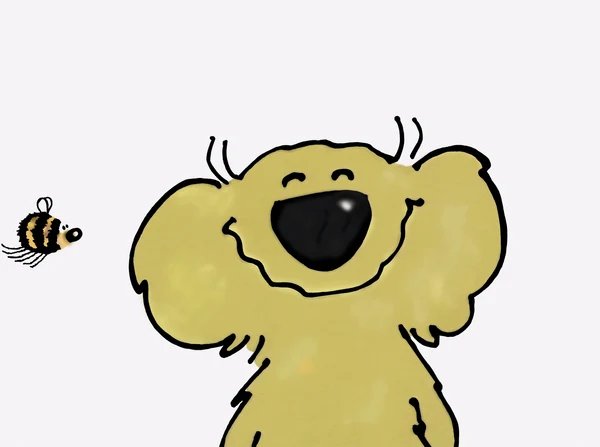
Roobarb and Custard is a perfect example of this era. Its deliberately shaky lines and frantic energy captured the imagination of a generation, and the show's chaotic charm has never really been replicated. This period also produced a wave of cult classics that traded slickness for personality, and that trade-off is precisely why they endure. Fans who grew up with these shows often describe the style as comforting rather than dated, because the imperfection is the point.
Preserving the Legacy: The BFI and Animation Archives
The British Film Institute is the national organisation responsible for preserving and celebrating moving image heritage, and its archive work is central to keeping early animation accessible. The BFI holds extensive collections of animation, from the earliest experiments to modern productions, and makes much of it available for research, screening, and public enjoyment.
Archives matter because early animation was often produced on fragile materials. Film stock degrades, cels are discarded, and without deliberate preservation, whole chapters of the history of British animation can simply disappear. The BFI National Archive works to prevent exactly that, restoring and cataloguing works that might otherwise be lost. For anyone researching the medium seriously, these collections are the starting point, and they underline why the history of British animation is treated as a subject worth protecting rather than a curiosity.
Roobarb 'Colour Pop' Limited Edition →
Collecting the History: Authentic Merchandise for Fans
For many fans, the history of British animation is not just something to read about, it is something to hold. Collecting authentic merchandise lets people keep a physical connection to the characters and shows that shaped their childhoods.
The key is authenticity. Officially licensed items carry the genuine character designs and artwork, whereas unbranded products often reproduce a rough approximation that loses the detail fans care about. Roobarb and Custard offers a curated range of officially licensed collectables.
A few examples from our range show what authentic merchandise looks like in practice:
| Item | Price | Best For |
|---|---|---|
| Roobarb 'Colour Pop' Limited Edition Mounted Print (40x50cm) | £75.00 | Wall art for a living room or office |
| Custard 'Colour Pop' Limited Edition Mounted Print (40x50cm) | £75.00 | Pairing with the Roobarb print as a set |
| "Roobarb Face Style Sheet" Animator Notes T-Shirt | £19.99 | Everyday wear for fans of the show |
| "Custard Style Sheet" Animator Notes Sweatshirt | £29.99 | A warmer layer for cooler months |
Both prints are limited to 100 worldwide and are printed in the UK on 280gsm satin white media, mounted on off-white board. The apparel is made from 100% organic cotton, with the animator style sheets reproducing genuine behind-the-scenes sketches and studio notes. Shoppers often ask whether the higher prices compared with generic online listings are justified, and the answer is straightforward: licensed artwork, UK printing, and limited production runs all cost more than unlicensed reproductions.
Conclusion: Why British Animation Still Matters
The history of British animation matters because it shows what small teams with limited resources can achieve through craft and personality. From the earliest trick films to the wobbly classics of the 1970s, the throughline is a willingness to favour character over polish, and that instinct is exactly what makes so much of this work still watchable today.
If you want to keep that history alive in your own home, Roobarb and Custard offers officially licensed prints, apparel, and homeware featuring the characters fans remember. Our limited edition mounted prints, organic cotton t-shirts, and animator style sheet sweatshirts are made for people who want authentic items rather than approximations. Get started with Roobarb and Custard and bring a genuine piece of animation history into your home.
Frequently Asked Questions
What is considered the first British animated film?
The first British animated film is often cited as 'The Hand of the Artist' (1906) by Walter R. Booth, which used stop-motion techniques to animate objects. However, 'The Adventures of Prince Achmed' (1926) by Lotte Reiniger, though German-born, was made in Berlin but influenced British animators. For a purely British production, 'The Story of the Flag' (1919) by Anson Dyer is a key early example. These pioneers laid the groundwork for the rich history of British animation.
Which animation techniques are most associated with British studios?
British studios are renowned for stop-motion, particularly claymation and model animation, as seen in the works of Aardman Animations. Traditional 2D hand-drawn animation also thrived, with studios like Halas and Batchelor producing many classics. The 1970s saw a distinctive 'wobbly' marker-pen style popularised by Bob Godfrey. Each technique contributed to the unique character of classic British cartoons.
How did the BFI influence the preservation of British animation?
The British Film Institute (BFI) has played a crucial role in preserving British animation through its National Archive. It restores and archives significant works, making them accessible for future generations. The BFI also funds research and screenings, ensuring that the history of stop-motion animation in the UK and other styles are not lost. Their efforts help maintain the cultural legacy of British animation.
What are the most iconic British animated characters of the 20th century?
Iconic characters include Wallace and Gromit, Paddington Bear, and the beloved duo Roobarb and Custard. Roobarb, the manic green dog, and Custard, the smug pink cat, captured hearts with their wobbly adventures in the 1970s. Other notable characters are Danger Mouse, SuperTed, and the Mr. Men. These characters represent the creativity and humour that define classic British cartoons.
How has the British animation industry evolved since the 1970s?
Since the 1970s, the industry has embraced digital technology while retaining its storytelling charm. Studios like Aardman continue to produce stop-motion hits, while others focus on CGI. The 1970s wobbly style gave way to more polished looks, but the influence of that era persists. Today, British animation is a global force, with both independent and large-scale productions thriving.
What role did stop-motion play in the success of British animation?
Stop-motion was pivotal, giving British animation a distinctive tactile quality. From the early days of model animation to the claymation of Wallace and Gromit, it allowed for expressive characters and imaginative worlds. The history of stop-motion animation in the UK is marked by innovation, with pioneers like Bob Godfrey and Aardman pushing boundaries. This technique remains a cherished part of British animation heritage.